
Metabolic Adaptation After Weight Loss: How Exercise and Nutrition Help
Table of Contents
ToggleMetabolic Adaptation After Weight Loss: How Exercise and Nutrition Offset It
Weight loss is often celebrated as a major health achievement, but maintaining that weight loss can be surprisingly difficult. One reason is a biological response known as metabolic adaptation, sometimes referred to as “adaptive thermogenesis.”
After significant weight loss, the body may burn fewer calories than expected for its new body size. This metabolic slowdown can make it easier to regain weight even when calorie intake remains relatively controlled.
Researchers have increasingly focused on how lifestyle strategies—particularly exercise and nutrition—can help counteract metabolic adaptation. A comprehensive review published in Obesity Reviews examined how metabolic adaptation occurs and what strategies may help offset its effects.
Understanding these mechanisms can help individuals maintain long-term weight loss and support healthier metabolism.

1. What Is Metabolic Adaptation?
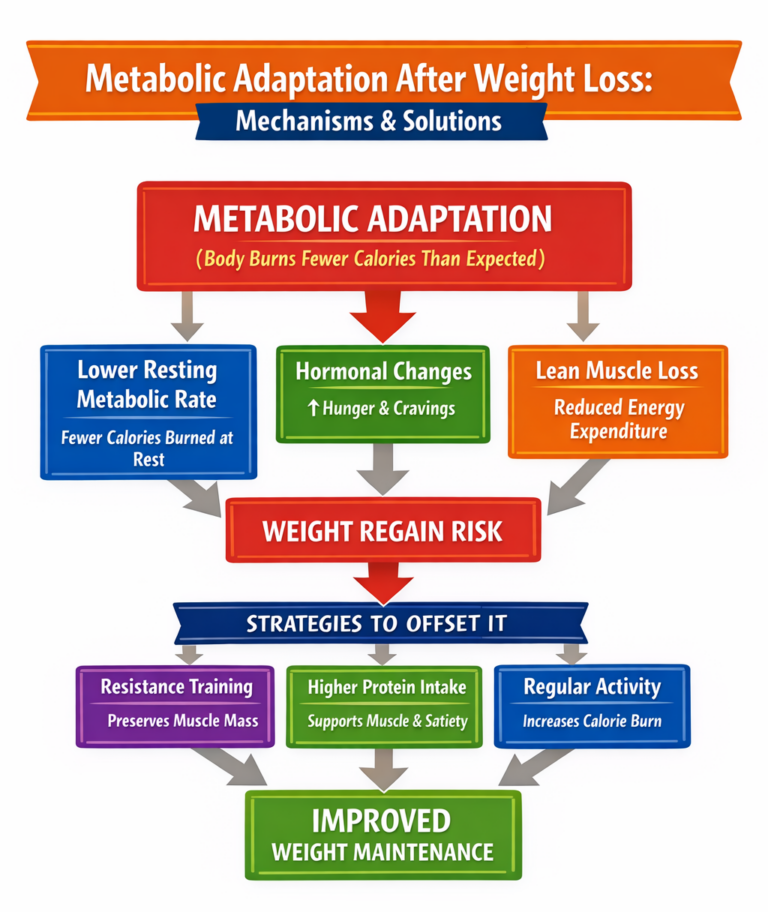
Metabolic adaptation refers to a decrease in energy expenditure that occurs after weight loss. In simple terms, the body becomes more energy-efficient and burns fewer calories than expected.
Normally, energy expenditure decreases as body weight decreases. However, metabolic adaptation goes beyond this predictable change.
For example, someone who loses 10 kilograms may burn fewer calories than another person who naturally weighs the same amount but has not undergone weight loss.
This phenomenon occurs because the body attempts to conserve energy and defend against further weight loss.
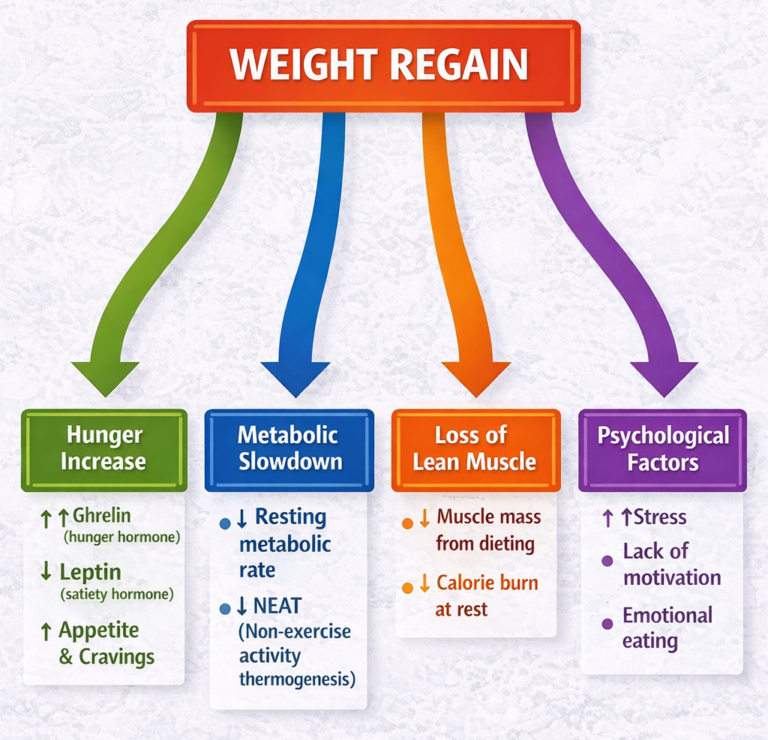
Several components of energy expenditure may decline:
Together, these changes can create a metabolic environment that favors weight regain.
2. Why the Body Adapts After Weight Loss
From an evolutionary perspective, metabolic adaptation is a survival mechanism. Historically, periods of food scarcity were common, and conserving energy helped humans survive during famine.
When calorie intake drops significantly during dieting, the body responds by:
Reducing energy expenditure
Increasing hunger signals
Altering hormone levels related to metabolism
Hormones that regulate appetite and metabolism can shift dramatically during weight loss. For example:
These hormonal changes encourage eating while simultaneously slowing metabolism.
Although this response helped humans survive in the past, it can make long-term weight maintenance challenging in modern environments where food is widely available.

3. Evidence for Metabolic Adaptation
Scientific research has consistently demonstrated the presence of metabolic adaptation following weight loss.
The review published in Obesity Reviews evaluated numerous studies investigating changes in energy expenditure during and after weight reduction.
Key findings from the research include:
Resting metabolic rate often declines more than predicted by weight loss alone
Hormonal changes can persist long after weight loss occurs
Metabolic adaptation may contribute to long-term weight regain
In some cases, the metabolic slowdown can persist for months or even years after dieting.
However, the degree of metabolic adaptation varies significantly between individuals. Factors such as genetics, body composition, diet composition, and physical activity levels can influence the magnitude of this response.
4. How Exercise Helps Counter Metabolic Adaptation
Physical activity is one of the most effective strategies for reducing the impact of metabolic adaptation.
Exercise helps maintain energy expenditure in several ways.
Preserving lean muscle mass
Muscle tissue is metabolically active and contributes to resting energy expenditure. Resistance training during and after weight loss can help preserve lean body mass, preventing some of the metabolic slowdown associated with dieting.
Increasing total daily energy expenditure
Regular exercise increases the number of calories burned each day. This helps offset the reduced metabolic rate that may occur after weight loss.
Improving metabolic flexibility
Exercise improves the body’s ability to switch between burning carbohydrates and fats for energy. This metabolic flexibility may support healthier energy balance and weight maintenance.
Research consistently shows that individuals who maintain high levels of physical activity after weight loss are more likely to sustain their weight loss long term.
5. Nutrition Strategies That Support Metabolism
Dietary strategies can also help reduce the impact of metabolic adaptation.
Higher protein intake
Protein helps preserve lean body mass and has a higher thermic effect compared with carbohydrates and fats. This means the body burns more calories during digestion when protein intake is higher.
Higher-protein diets may therefore help maintain energy expenditure during weight maintenance.
Balanced calorie intake
Extremely aggressive calorie restriction can amplify metabolic adaptation. Gradual weight loss and balanced calorie intake may reduce the severity of metabolic slowdown.
Nutrient-dense foods
Diets rich in whole foods—such as vegetables, fruits, lean proteins, and whole grains—support overall metabolic health and help maintain satiety.
Meal timing and consistency
Consistent meal patterns may also help stabilize energy levels and reduce overeating, which can contribute to weight regain.
6. Long-Term Strategies for Preventing Weight Regain
Because metabolic adaptation can persist after weight loss, maintaining healthy habits over the long term is essential.
Research suggests several strategies are particularly helpful:
Maintaining regular physical activity
Preserving muscle mass through resistance training
Consuming adequate dietary protein
Monitoring calorie intake and body weight
Maintaining consistent sleep patterns
Long-term weight maintenance requires a combination of behavioral, nutritional, and physiological strategies.
Importantly, metabolic adaptation does not make weight maintenance impossible—it simply means that sustaining weight loss often requires ongoing lifestyle adjustments.
Summary Diagram
Final Takeaway
Metabolic adaptation is a natural physiological response to weight loss that can slow metabolism and increase the risk of weight regain. While this response can make long-term weight maintenance more challenging, it does not make it impossible.
Research shows that strategic lifestyle interventions—particularly regular exercise and adequate protein intake—can help offset metabolic adaptation. Preserving lean muscle mass, maintaining physical activity, and following balanced nutrition patterns are key components of long-term success.
By understanding how the body responds to weight loss, individuals can implement strategies that support metabolic health and improve the chances of maintaining weight loss over time.
 References
Metabolic adaptation after weight loss: implications for the athlete – Obesity Reviews
Adaptive thermogenesis in humans – International Journal of Obesity
Metabolic adaptation and weight loss maintenance – American Journal of Clinical Nutrition
Protein intake and metabolism during weight loss – American Journal of Clinical Nutrition